

The New Standard for Professional First Impressions
A professional photo on a LinkedIn profile can make a significant difference. According to LinkedIn's own data, profiles with one receive approximately fourteen times more views. For remote marketing teams, this is not just a vanity metric; it directly influences lead generation, networking, and brand perception. Since their emergence around 2023, AI headshot generators have shifted from a novelty to an essential tool for achieving consistent remote team branding.
This technology has made studio-quality, uniform headshots accessible and affordable for teams of any size. The challenge is no longer about access but about choice. This article provides a practical framework for marketing leaders to select an AI headshot style that aligns with their brand identity and strategic goals. For a broader look at this topic, you can explore our complete guide to modern business headshots.
Matching Headshot Aesthetics to Your Industry's Language
Think of a headshot as a silent introduction. Before anyone reads a bio or a title, your team’s photos have already communicated a message. A mismatch between your headshot style and your industry’s visual language can create a subtle but powerful sense of dissonance. For example, a financial advisor with a headshot better suited for a creative director might unintentionally signal a lack of seriousness, while a tech startup using overly formal portraits could appear rigid and unapproachable.
Different industries have unwritten rules for how they present themselves professionally. As an analysis from Vidguru highlights, finance often favors formal portraits, while tech startups lean toward bright, natural-light compositions. Understanding these visual cues is the first step in choosing the right corporate AI headshots. The goal is to speak the same visual language as your clients and competitors to build immediate credibility.
| Industry | Key Style Characteristics | Desired Perception |
|---|---|---|
| Finance / Law | Formal attire, neutral studio background, sharp lighting, direct gaze | Authority, Trustworthiness, Seriousness |
| Tech / Startups | Casual-professional clothing, natural light, soft focus, slight smile | Approachable, Innovative, Collaborative |
| Creative / Design | Expressive poses, unique or textured backgrounds, dynamic angles | Creativity, Originality, Confidence |
| Healthcare | Professional uniform or scrubs, clean and simple background, warm expression | Competence, Empathy, Reliability |
To define your team’s style, conduct a simple visual audit. Look at the LinkedIn profiles of your top three competitors, five industry leaders you admire, and ten ideal clients. What patterns do you see in their headshots? Note the clothing, backgrounds, and expressions. The objective is not to copy them but to align your team’s visual identity with market expectations, ensuring your brand feels both authentic and authoritative. For more ideas, you can review other articles on business headshots.
The Science Behind a High-Impact Headshot
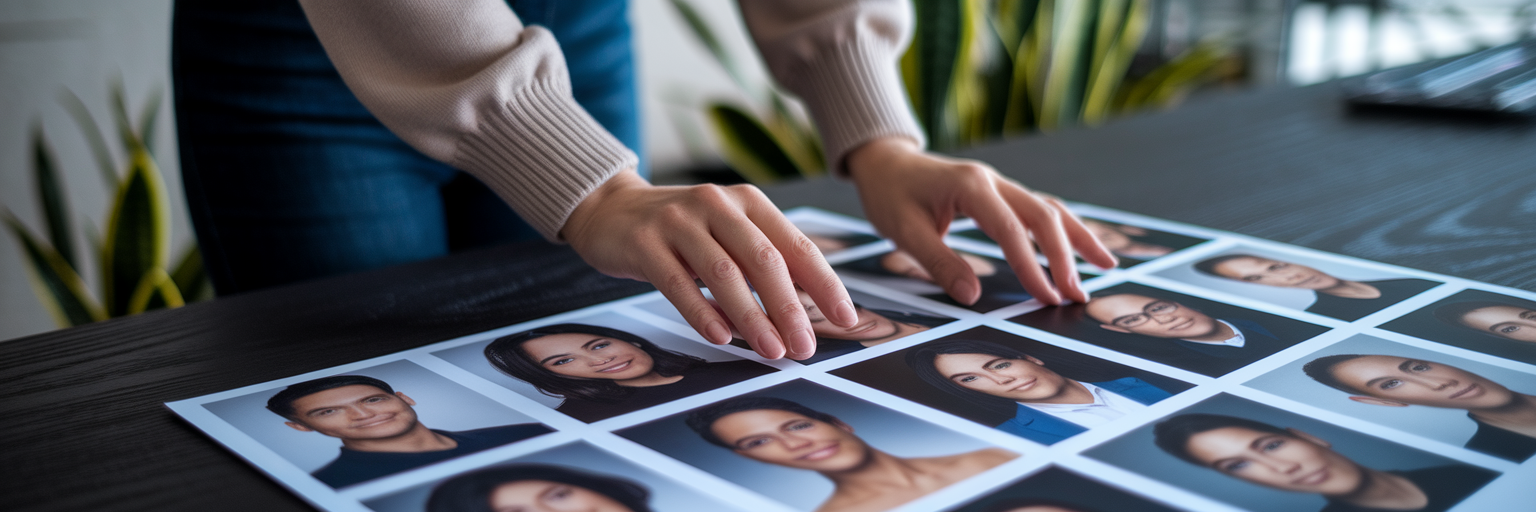
First impressions are formed almost instantly. In fact, research from Princeton scholars found that people make judgments about trustworthiness and competence in as little as 100 milliseconds. This means your headshot shapes perceptions before a single word of your profile is ever read. Understanding the subtle psychological triggers behind visual elements allows you to communicate your intended message with precision.
These non-verbal signals are not arbitrary. They are rooted in how our brains interpret social cues. Consider these elements when selecting a style:
- A direct gaze combined with a slight, genuine smile is universally perceived as approachable and trustworthy. This is ideal for client-facing roles where building rapport is paramount.
- A more neutral expression and formal posture tend to convey authority and expertise. This style works well in industries where seriousness and competence are the primary currency.
Choosing the best AI headshot for LinkedIn is an act of strategic communication. For a marketing team focused on building friendly, collaborative partnerships, a warm and open style is the clear choice. Conversely, a team advising on high-stakes financial decisions might opt for a more formal look to build confidence. By consciously selecting these cues, you can avoid some of the common professional headshot mistakes and build immediate rapport with your target audience.
Evaluating Technical Quality and Consistency
Not all AI-generated images are created equal. Once you have defined your desired style, the next step is to ensure the technical output meets professional standards. A low-quality image can undermine your brand just as much as an inappropriate style. When assessing AI headshot generator quality, focus on a few key benchmarks.
Your checklist should include:
- High Resolution: Images should be delivered in high resolution, ideally 4K. This ensures they look sharp on all devices and can be used for print materials without losing quality.
- Photorealism: The final images must look like real photographs. Look for the absence of digital artifacts, such as unnatural skin textures, distorted hands, or oddly shaped eyes.
- Consistent Inputs: The platform should provide clear guidelines for the selfies your team submits. As noted by Headshottr, consistent lighting and expression in the source photos are crucial for achieving a uniform result across the team.
Maintaining a cohesive look for a distributed team is a common challenge. The best AI models can render each person’s unique facial features accurately while applying a consistent style and background. This ensures that your team presents a united front, even when its members are spread across the globe. A modern AI headshot generator should make this process straightforward.
Streamlining Brand Cohesion for Remote Teams
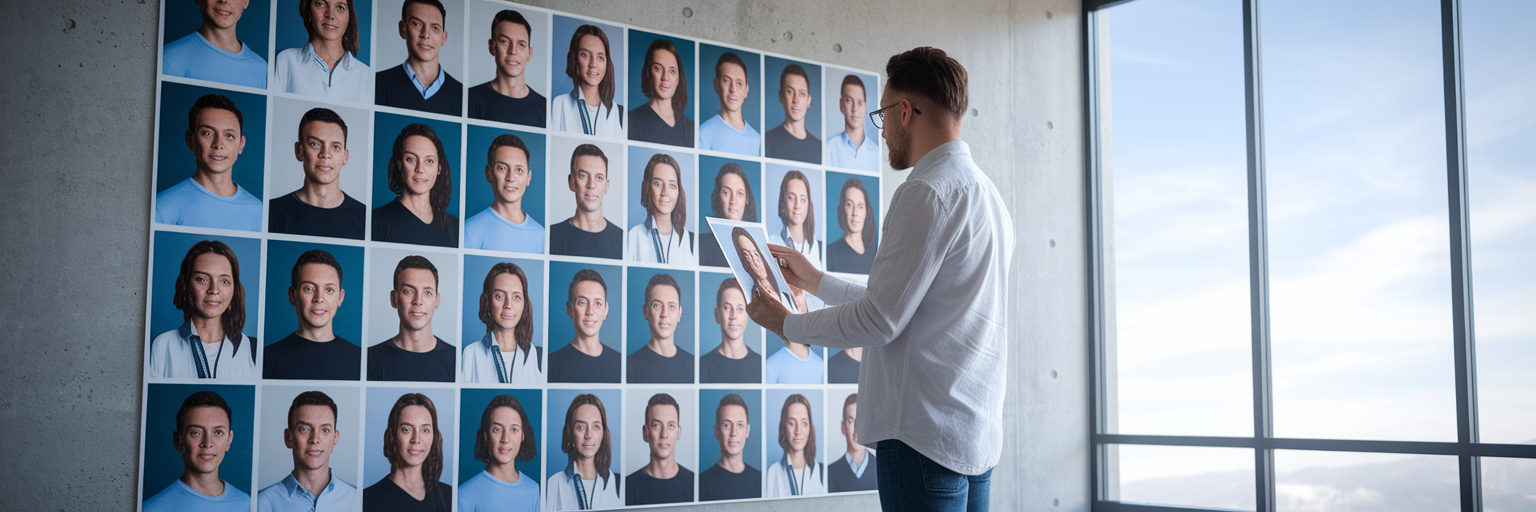
Managing visual assets for a distributed marketing team can quickly become a logistical headache. Without centralized control, you risk brand fragmentation, with team members using mismatched photos across different platforms. Modern AI headshot platforms solve this problem with features designed specifically for brand consistency at scale. These tools are essential for effective remote team branding.
Look for platforms that offer the following solutions:
- Shared Style Templates: This allows a manager to pre-define a specific look, from clothing to background, ensuring every team member’s headshot adheres to the same brand guidelines.
- Branded Background Libraries: The ability to upload custom backgrounds with your company logo or brand colors provides an extra layer of brand reinforcement.
- Team Dashboards and API Access: Centralized dashboards give managers oversight of the entire process. As noted in an Apollo Technical report, platforms with these features let managers assign a single style to the entire team with minimal effort.
These features make brand management seamless, especially when integrated with other content scheduling and management tools that help automate a team's entire digital footprint, as seen with platforms like Postingcat. For larger organizations, solutions like our enterprise-grade platform offer advanced management capabilities that integrate directly into existing workflows, making it simple to maintain a polished and unified brand presence across the entire company. This is where selecting the right AI headshot styles for teams becomes a scalable, strategic advantage.
Balancing Cost, Turnaround Time, and Data Privacy
The final decision often comes down to a pragmatic analysis of cost, speed, and security. AI headshots offer a compelling value proposition compared to traditional photography. An Apollo Technical benchmark study found that AI services can deliver dozens of shots for a fraction of the cost of a single studio session, representing significant savings, especially for large teams. You can see a clear breakdown by reviewing our pricing structure.
For agile marketing teams, speed is also a critical factor. Onboarding a new team member or launching a new campaign requires quick updates to professional profiles. AI platforms can deliver finished headshots in hours, compared to the weeks-long process of scheduling, shooting, and editing with a traditional photographer.
However, this efficiency must be balanced with a careful consideration of data privacy. Data retention policies vary widely between providers. For teams in regulated industries like finance or healthcare, it is essential to scrutinize these policies to ensure compliance. The ideal solution is one that offers:
- Affordability that fits your team’s budget.
- Rapid turnaround to keep pace with business needs.
- Robust privacy safeguards that protect your team’s data.
Making a choice that balances these three factors empowers you to enhance your brand responsibly and effectively.
The Future of Automated Visual Branding
While AI headshots are now a standard tool for professional branding, strategic selection is what creates a true competitive advantage. Simply having a professional photo is no longer enough. The teams that will stand out are those that master the art of choosing the right AI headshot styles for teams, aligning their visual identity with their brand message and market expectations.
Looking ahead, this technology will likely become even more integrated into our professional lives. We can anticipate its inclusion in marketing automation platforms, allowing for dynamic style adjustments based on A/B testing or audience segmentation. Imagine a future where your team’s headshots automatically adapt to resonate with different client personas.
By mastering the principles of style selection, psychological impact, and technical quality now, remote marketing teams can build a cohesive and impactful visual identity. This will give them a decisive edge in the increasingly competitive digital environment of tomorrow.